
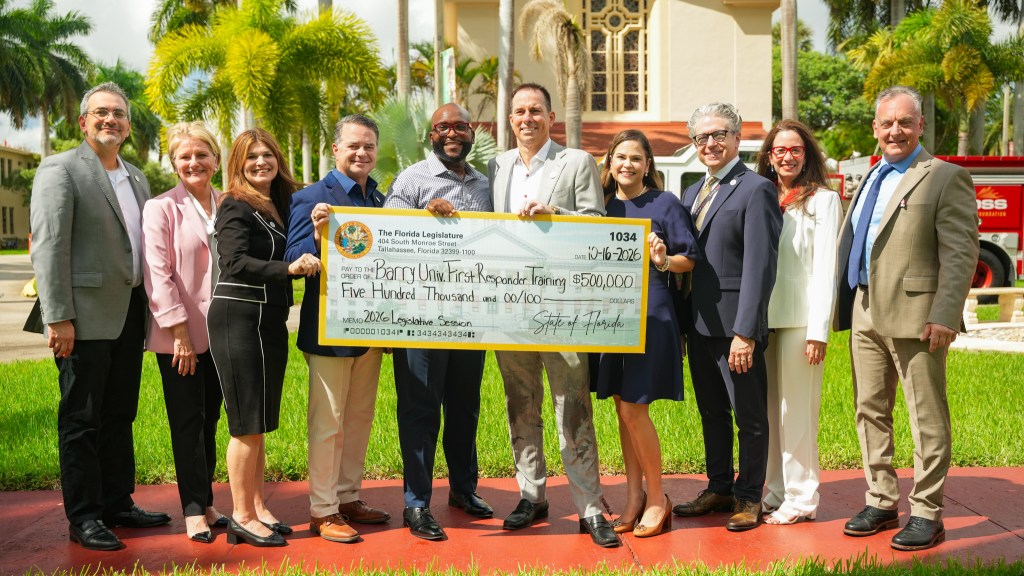
Barry University has secured $500,000 in state funding to implement a uniform, evidence-based First Responder Risk Detection Training Program that improves the quality, consistency, and safety of suicide crisis responses across Florida. The appropriation, advocated for by Barry University and supported through a bipartisan effort by state Senator Shevrin Jones, and Representative Alex Rizo, was approved and signed as part of the 2026-27 state budget.
The program is expected to begin rolling out this fall and will support training for close to 8,000 first responders across Florida. Funding will cover operations, program execution, curriculum development and training for instructors, who will be current or former first responders.
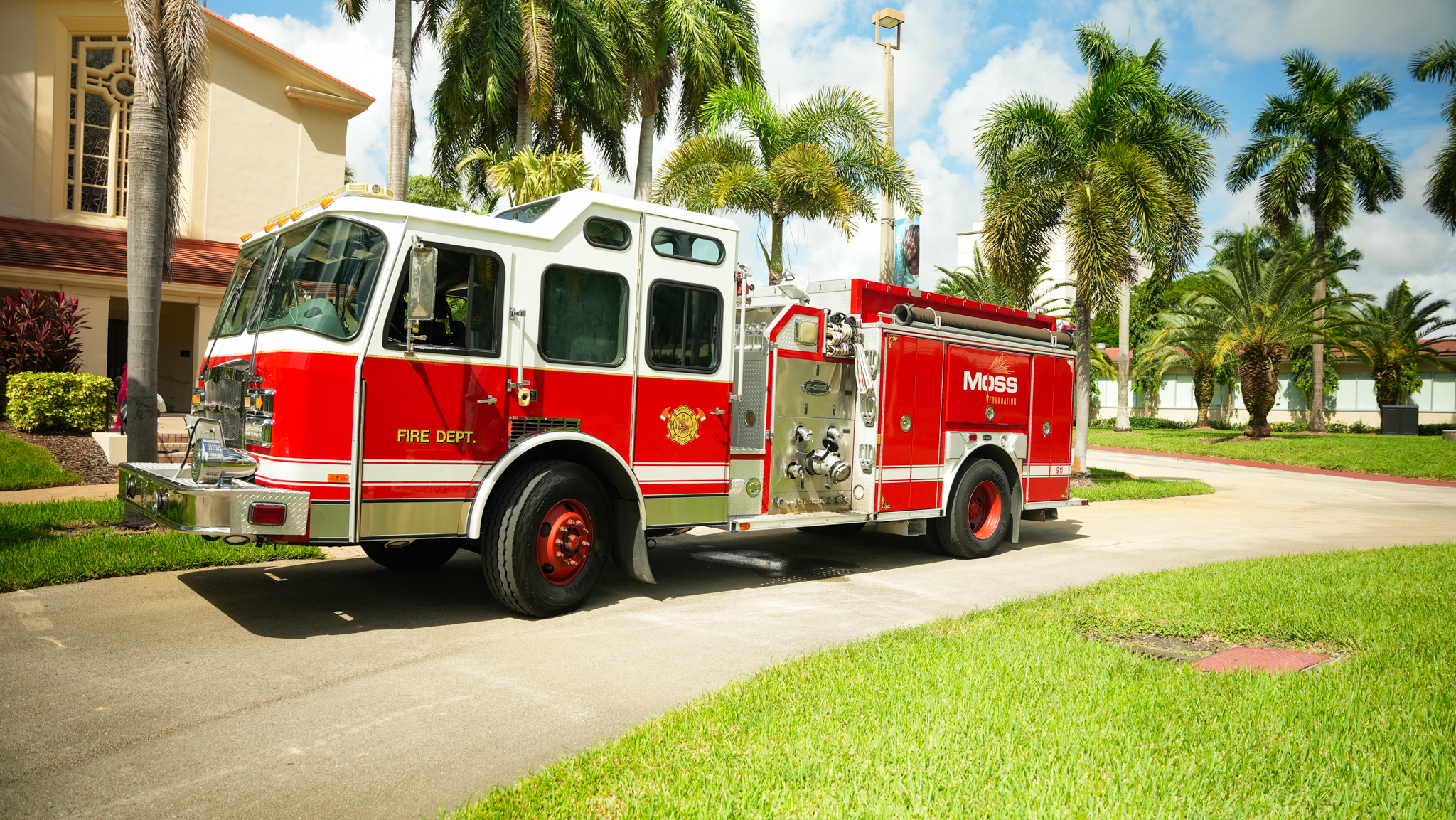
First responders across the U.S.respond to a suicide-related call every 11 minutes, placing them on the front lines of one of the state’s most complex mental health and public safety challenges. Within the first responder community, the toll of repeated exposure to trauma, crisis and loss continues to grow, with more suicides among first responders reported each year.
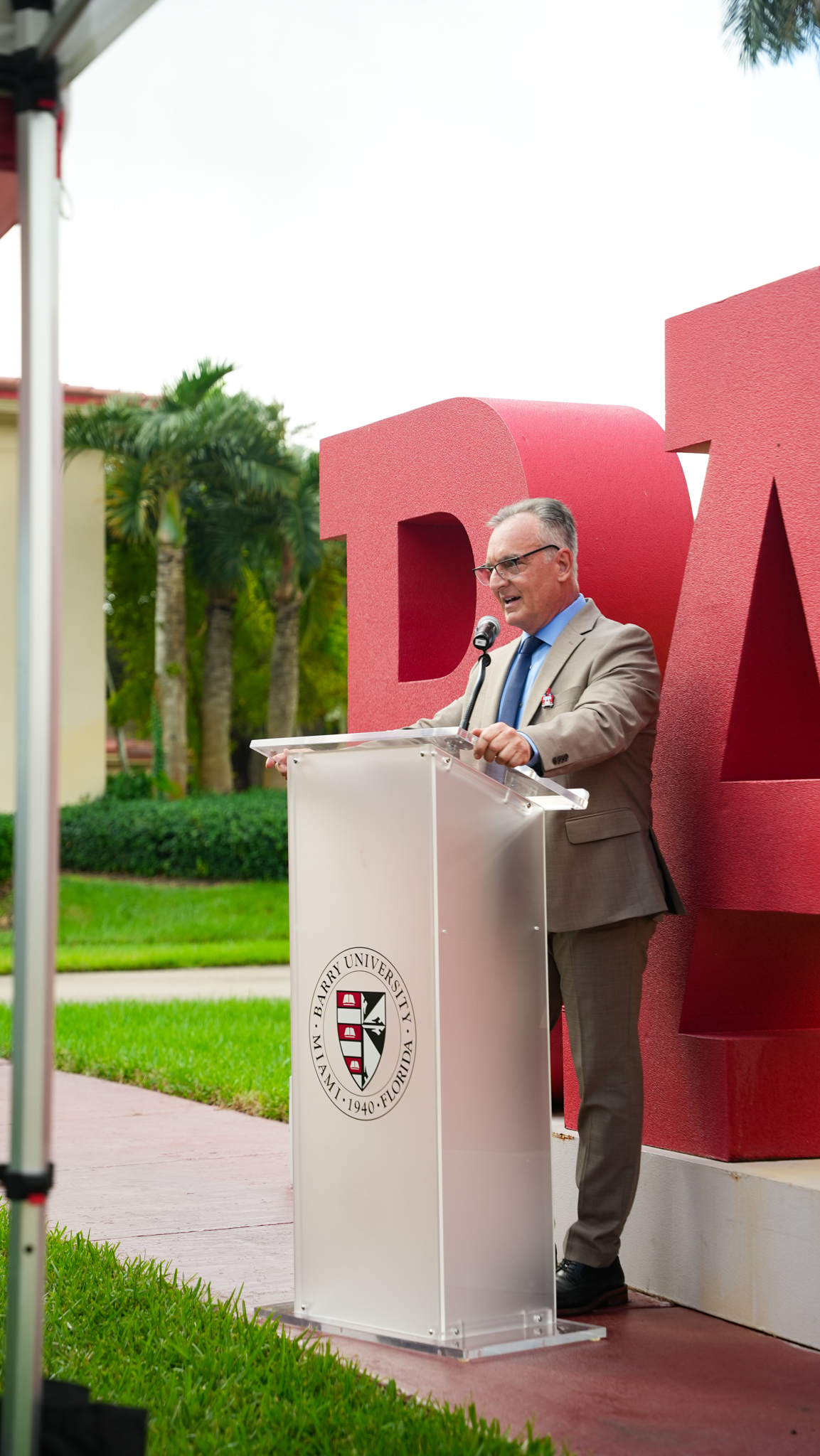
“First responders carry the weight of some of the most difficult moments in our communities, and they deserve training that helps protect their own well-being as much as their ability to serve others,” said Mike Allen, Ph.D., President of Barry University. “This bipartisan investment allows Barry University to help strengthen Florida’s public safety infrastructure through a proactive, standardized approach that supports the holistic well-being of first responders.”
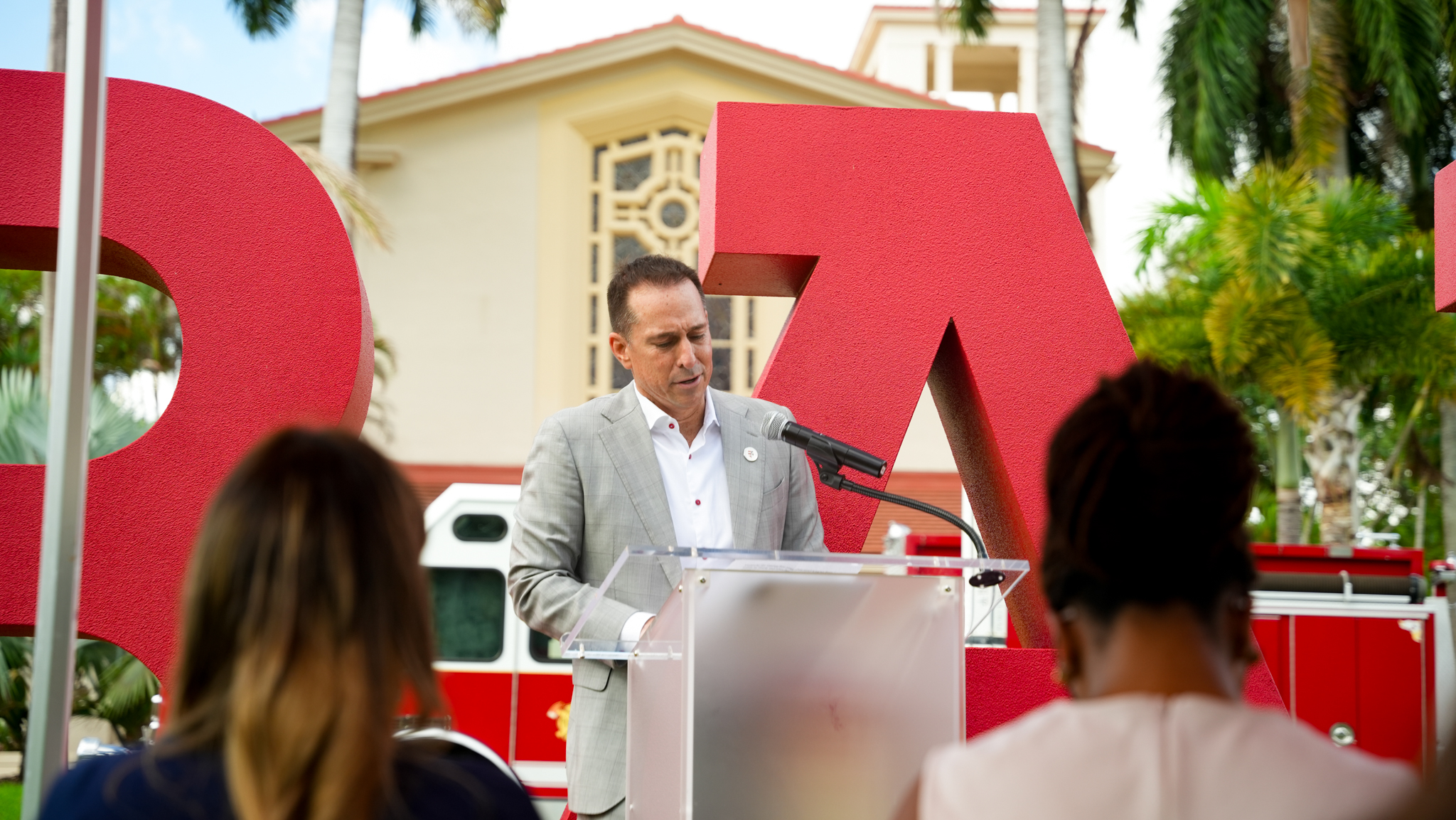
“Protecting the people who answer Florida’s toughest calls has never been a partisan issue,” explained Rep. Rizo. “Barry University brought us a plan that will improve the well-being and safety of our first responders, and I’m proud to have championed the funding to bring it to life.”
Barry University will create the curriculum for the First Responder Risk Detection Training, with the program co-developed by Dr. Rodolfo Bonnin, Dean and professor of Barry University’s School of Mental Health and Social Work, and Frank Galgano, Director of Emergency Management programs at Barry University. Using a train-the-trainer model, unlike reactive training models which vary by county or depend on existing healthcare coverage, Barry University’s program will prepare current and former first responders to help deliver standardized training across the state. The initiative is designed to improve decision-making under high-stress conditions, reduce reliance on subjective judgement and emotional reaction, enhance responder safety and public trust, and increase successful connection to appropriate mental health care.
Further building on Barry University’s growing work in emergency services education and its broader commitment to public safety, mental health and community well-being, it creates a foundation for future partnerships with public safety agencies, first responder organizations, healthcare professionals and behavioral health leaders across Florida. For more information on Barry University, visit https://www.barry.edu/.



Leave a Reply