
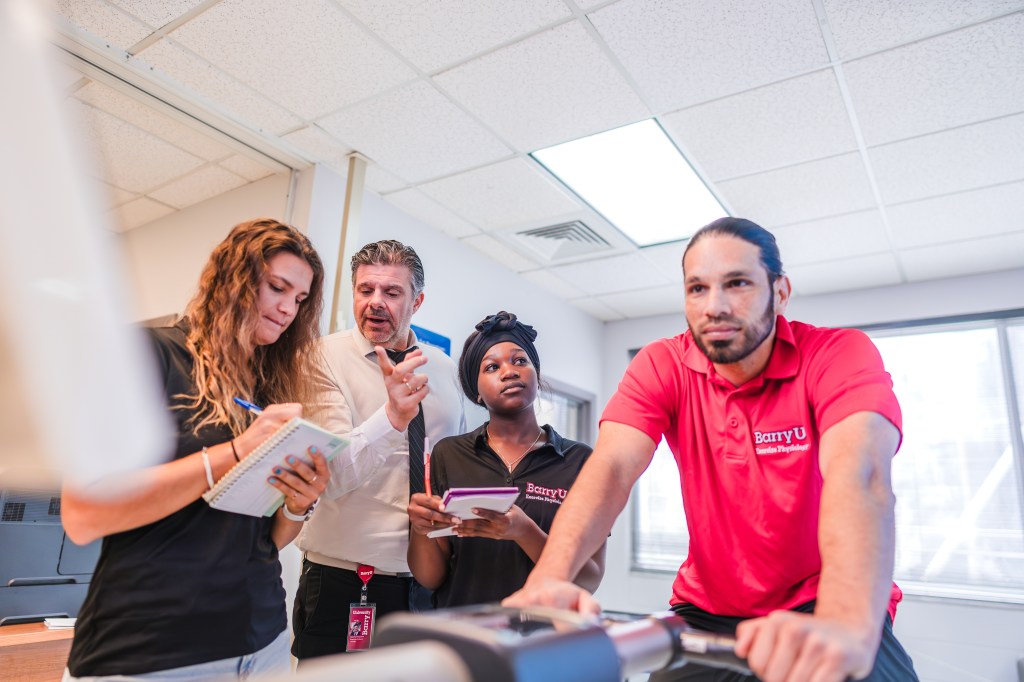
In a groundbreaking study published in the European Journal of Investigation in Health, Psychology and Education, Dr. Zacharias Papdakis, Associate Professor Exercise, Physiology and Wellness at Barry University explores the intersection of mental toughness, self-compassion, and mindfulness among collegiate athletes. This research offers valuable insights into how these psychological constructs interact and how mindfulness can serve as a bridge between them.
The study, titled “Is Mindfulness the Common Ground Between Mental Toughness and Self-Compassion in Student Athletes? A Cross-Sectional Study,” involved a cross-sectional survey of 396 NCAA Division II, III, and NAIA collegiate athletes, with a mean age of 19.8 years and a nearly equal gender distribution.
Historically, mental toughness (MT) and self-compassion (SC) have been viewed as opposing traits—MT associated with resilience and performance under pressure, and SC linked to self-kindness and emotional well-being. This study challenges that dichotomy by investigating whether mindfulness can mediate the relationship between MT and SC.
Key Findings
- Positive Correlation: A significant positive correlation (r = 0.46) was found between mental toughness and self-compassion, suggesting that these traits can coexist synergistically.
- Mindfulness as a Mediator: When mindfulness was included in the model, the correlation between MT and SC decreased to 0.31, indicating that mindfulness partially mediates this relationship.
- Gender Differences: Female athletes scored slightly lower on self-compassion compared to their male counterparts, a finding that warrants further exploration.
These findings suggest that mindfulness-based interventions can be instrumental in enhancing both mental toughness and self-compassion among athletes. By fostering mindfulness, athletes may develop greater resilience while also cultivating a kinder, more accepting relationship with themselves.
This integrated approach can lead to improved performance, reduced burnout, and better overall mental health. Coaches and sports psychologists might consider incorporating mindfulness practices into training regimens to support athletes’ psychological well-being.
This study underscores Barry University’s commitment to advancing research in sports psychology and athlete mental health. By challenging traditional notions and exploring the interplay between key psychological traits, the university contributes valuable knowledge that can inform practices in athletic programs nationwide.
For a more detailed exploration of this study, you can access the full article here: MDPI
Note: This blog post is based on the study “Is Mindfulness the Common Ground Between Mental Toughness and Self-Compassion in Student Athletes? A Cross-Sectional Study” by Papadakis, Z.; Walsh, S.M.; Morgan, G.B.; Deal, P.J.; Stamatis, A., published in 2025.
 Barry University Blog
Leave a comment