

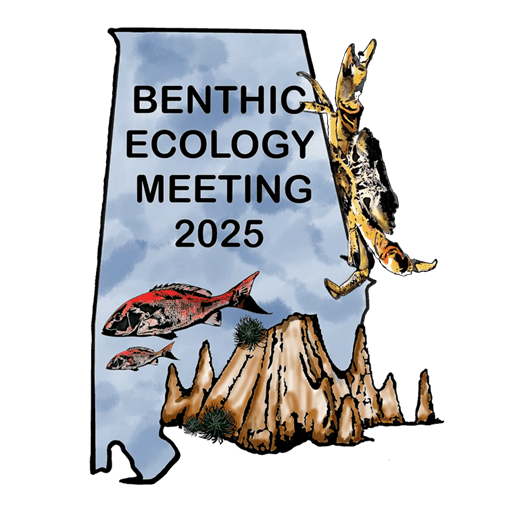
At Barry University, the spirit of collaboration between faculty and students fuels groundbreaking research—and that spirit was on full display at the 53rd Annual Benthic Ecology Meeting (BEM) in Mobile, Alabama.
Hosted by the Dauphin Island Sea Lab, the Benthic Ecology Meeting is one of the premier gatherings for marine scientists, with a mission to promote research on benthic ecosystems like rocky intertidal zones and coral reefs. Organized by the Benthic Ecology Meeting Society (BEMS), the event brings scientists from around the world and fosters an inclusive environment where students are given the opportunity to present their work, network with leading scientists, and explore graduate school and professional opportunities.
This year, Barry University was proud to have seven students in attendance, all of whom conducted their research in collaboration with Barry faculty members. Their participation not only reflects the University’s commitment to experiential learning but also showcases the high caliber of student research happening right here on campus.
Student Research Highlights:
– Yesiana Herrera and Sophia Setlock presented their work on “Changes in locomotor strategies due to limb loss in the arboreal Mangrove Tree Crab, Aratus pisonii.” Their research shed light on how these adaptable creatures compensate for injuries in their natural habitat.
– Ainsley Vanderhyde and Ariel Alibocas showcased their research poster on “Growth and survival of turtlegrass (Thalassia testudinum) seedlings under hydroponic and planted laboratory conditions,” a project that explores innovative methods for restoring important seagrass ecosystems.
– Ernest Charles Jr. delivered a fascinating presentation on “Vocalizations of mudskippers, Periophthalmus barbarus,” adding to the understanding of communication behaviors in amphibious fish species.
– Dicarlo Davis explored the evolution and function of fish eye coloration in his poster “Fish eye color: evolution and function,” investigating the ecological and evolutionary significance of visual traits in aquatic environments.
– Kendall Hovious took the stage with an oral presentation focused on sexually dimorphic coloration in certain fish species, offering insights into the role of color patterns in mating and survival strategies.
Each student’s presentation represented the culmination of months of dedicated research, developed through close mentorship with Barry faculty members who guided them through study design, data analysis, and the critical process of sharing scientific findings with the broader community.
Beyond presenting research, students had the invaluable opportunity to network with marine scientists from across the country and internationally. The meeting provided a gateway for students to learn about potential graduate programs, research assistantships, and job opportunities in the field—all while building professional connections that could shape their future careers.
At Barry University, we are proud to see our students excel on national stages like the Benthic Ecology Meeting. Their success is a direct reflection of the University’s emphasis on hands-on learning, faculty-student collaboration, and a commitment to nurturing the next generation of scientists.

 Barry University Blog
Leave a comment