
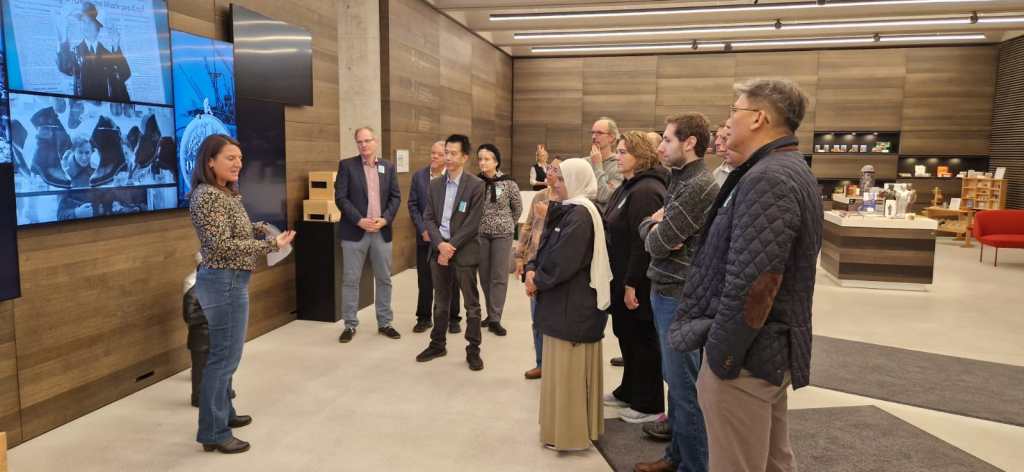
In November, Dr. Roman Wong returned to Technische Hochschule Nürnberg (“Nuremberg Tech”) for their annual International Week—this time, joined by his colleague, Dr. Kevin Kemerer, Associate Professor of Accounting. Building upon our longstanding partnership since 2003, Barry University and Nuremberg Tech continue exchanging ideas, faculty, and students, strengthening a cross-cultural academic bridge that has fostered mutual growth for over two decades.
This year’s theme, “Doing Business in a VUCA Environment,” offered a compelling lens through which we examined today’s international marketplace. VUCA—Volatile, Uncertain, Complex, and Ambiguous—perfectly describes the dynamic challenges confronting businesses worldwide. Our hosts at Nuremberg Tech curated a series of academic engagements that emphasized the importance of adaptability, innovation, and strategic decision-making. Whereas last year centered on leveraging Artificial Intelligence for business benefits, this year’s program focused on how organizations can thrive amid constant unpredictability.
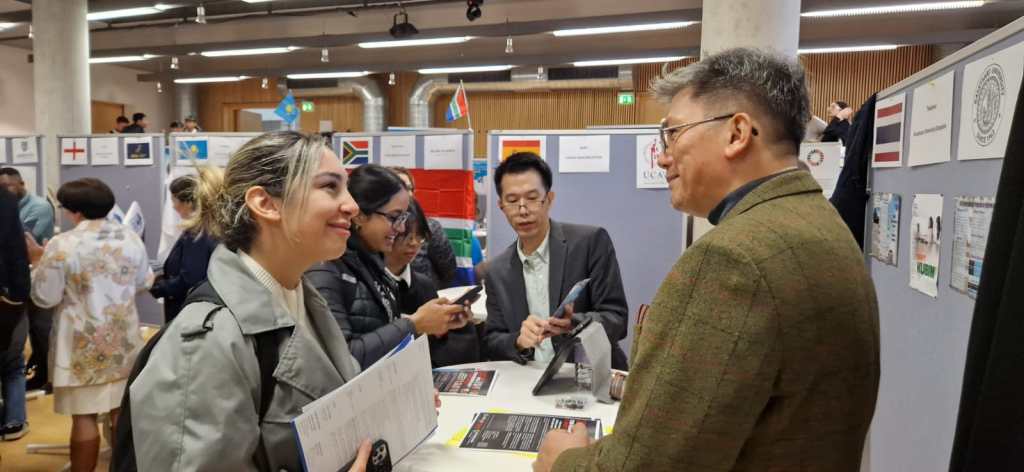
During the International Week, Dr. Kemerer and Dr. Wong engaged extensively with both undergraduate and graduate students. Dr. Kemerer’s lecture brought Cost-Volume-Profit (CVP) analysis into vivid focus, offering practical lessons on strategic planning and risk management—crucial skills in an environment where assumptions are continually tested. Building on his previous year’s theme of AI and productivity, Dr. Wong delved deeper into the “productivity paradox,” highlighting the puzzling gap between advanced AI investments and the still-elusive broad productivity gains.
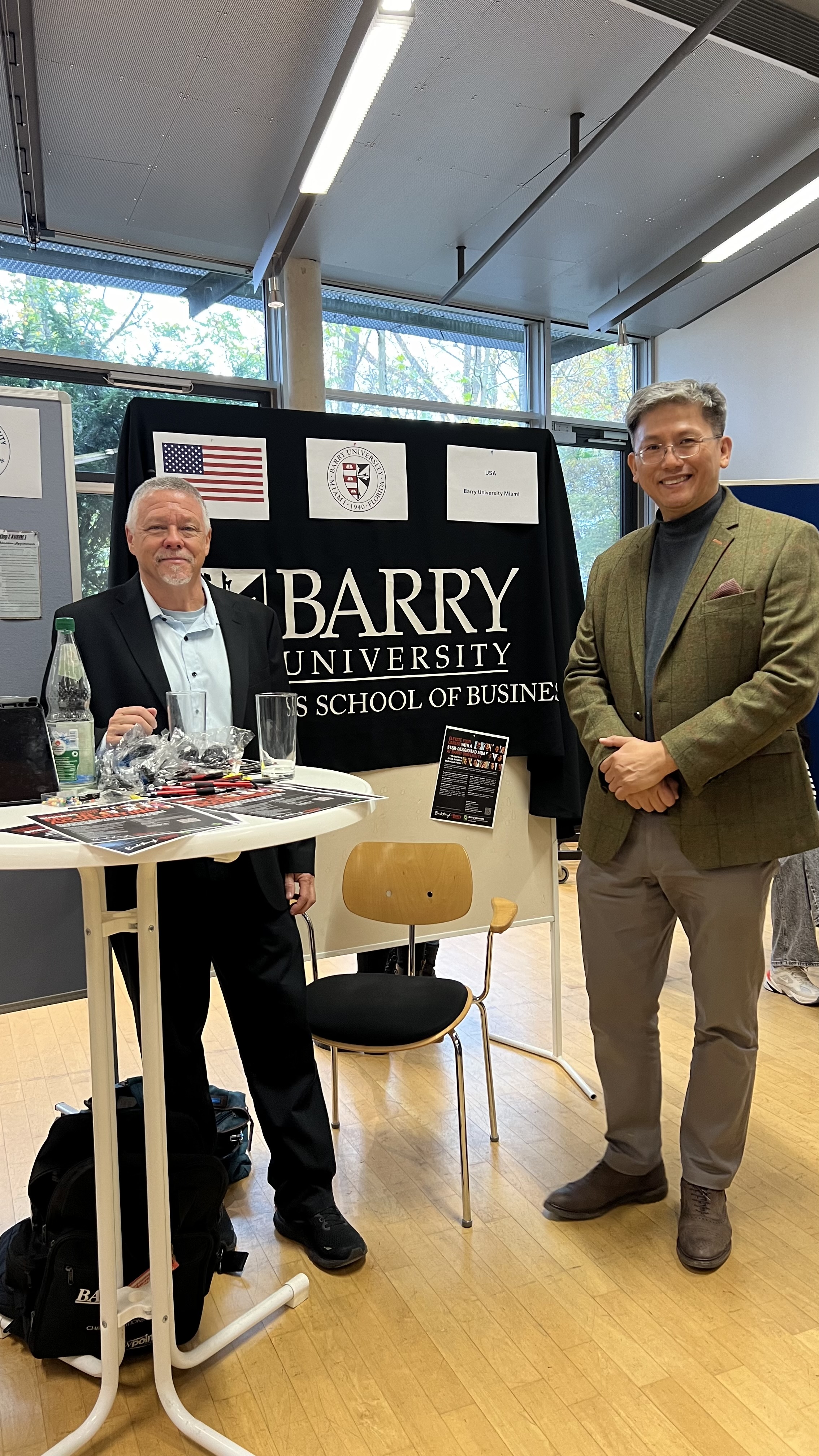
In another seminar, he presented research in progress that applies the Wong and Bhattacharyya Task-Structure (TS) approach to integrate AI tools into industry workflows. Demonstrating its application to customer onboarding processes at well-known companies like Apple and Netflix illustrated how structured methodologies help firms navigate complexity and ambiguity more effectively.
Beyond the classroom, they traveled to the neighboring town of Fürth to visit the Ludwig Erhard Museum. Erhard’s legacy in shaping Germany’s social market economy provided a historical perspective on economic resilience—underscoring that navigating uncertainty and complexity is not a novel challenge. This broader historical context sparked rich conversations with students, many of whom expressed keen interest in the prospect of becoming exchange students at Barry University, eager to broaden their academic and cultural horizons.
As the world continues to evolve rapidly, events like these remind us that knowledge knows no borders and that global collaboration is essential for developing the skills and insights needed to meet future challenges.

 Barry University Blog
Leave a comment